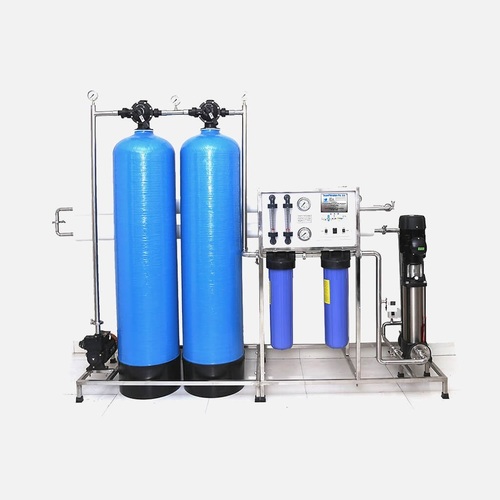
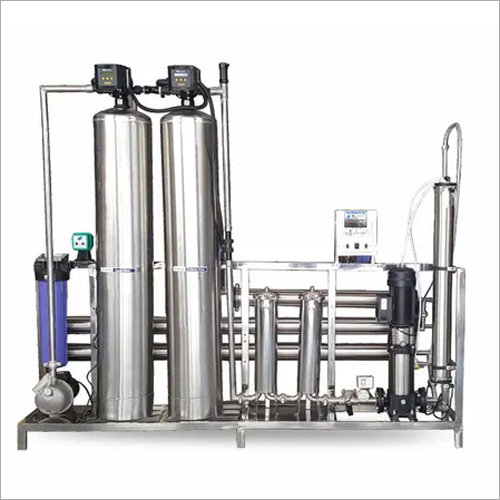
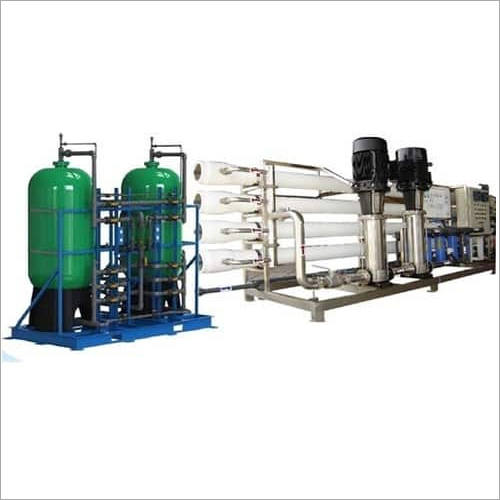
About FRP RO Plant 1000 Lph
Residential RO plants or systems
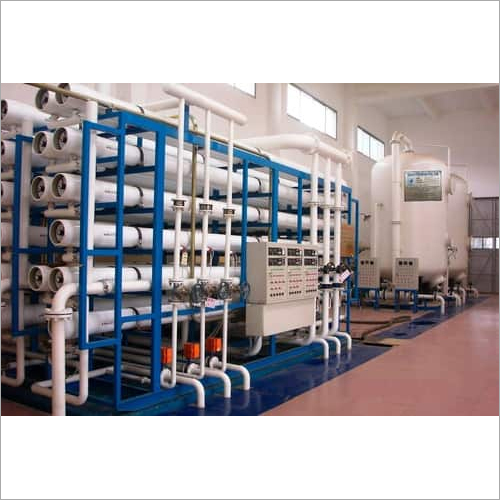
- Industrial RO plants or systems
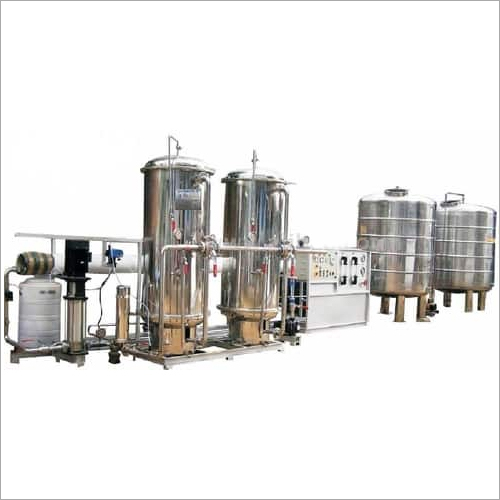
- Commercial RO plants or systems
Why to choose us?
EFPL's offered machines are examined under the supervision of our experts for stringent compliance with set industrial standards. In addition to this, the offered range of products is highly praised by our clients that are situated all across the globe. Our portfolio of reverse osmosis systems includes those specifically engineered and designed for large industrial applications, medium sized commercial applications, small laboratory applications and trailer-mounted mobile systems for temporary and emergency applications. With decades of R&D and standard product development devoted to reverse osmosis systems engineering, and thousands of installations around the country, customer can rely on EFPL for their most demanding liquid separation and purification needs using reverse osmosis technologies. Our RO plants make sure to keep the natural nutrients to maintain the health level of water. We design customize solutions which are suitable for marine applications to purify a large amount of water at once with high- Performance capacity.
Treatment Process of RO plants:
Fluidsystems RO plants work on the basis of Cross-filtration method, through which a percentage amount of feed water is rejected as the removal of solids during the filtration process. The whole process works through the combination of temperature and pressure. There are two elements while RO plants processing which are system recovery and product quality.
Working Procedure:
Reverse osmosis is water purification process in which pre-treated & filtered water is connected to the high-pressure pump where pressure is developed and fed to the RO membrane. Reverse Osmosis membranes work on the Cross flow Filtration method where the salts get rejected partially and deliver pure water. Purified water is referred to as product and waste water is referred to as concentrate or reject. The percent ofwater delivered as product is called the recovery. The ratio of recovery&output parameters depend upon the feed water quality, type of membrane,temperature and total RO unit design considerations.
Raw water is water found in the environment that has not been treated and does not have any of its minerals,ions, particles, bacteria, or parasites removed. Raw water includes rainwater,groundwater from infiltration wells, and water from bodies like lakes and rivers. Raw water pump is way to transfer the water into the engine through a seacock fitting and pumping it through the engine's water jacket. Here the water is filtered by Pressure sand filter for removal of suspended matters and turbidity.
Activated carbon works via a process called adsorption having efficiency up to 90% whereby pollutant molecules in the fluid to be treated are trapped inside the pore structure of the carbon substrate.It helps in preventing membrane from hardness.
Here Reverse Osmosis System rejects 90- 95% of Total Dissolved Solids.
To store treated pure water in tank
Features of FRP RO Plant 1000 Lph
- Pre-engineered systems mean easy installation
- Clean-in-place connections maximize system availability
- Compact footprint saves valuable floor space
- Quick equipment delivery keeps project moving fast
- Easy to install and operate.
- Produces high quality Water
- Variety of cost effective standard models.
- Excellent performance and highly usage.
Applications
- For pharmaceutical manufacturing, potable water supplied by a local municipality is not nearly pure enough. Their product specifications require water free of bacteria and organics, with dissolved solids levels that are 10,000 times lower than those found in potable drinking water. The first step in reducing the suspended solids levels is reverse osmosis where 98% of the influent water alts can be removed.
- A number of industries collect excess process water and rainwater contaminated by pollutants into catchment basins. During storm events these basins can be in danger of overflowing and creating an environmental impact by polluting near by surface and groundwater. Portable reverse osmosis systems are used to reduce the volume of water in these basins, thereby allowing the facility to discharge clean unpolluted water while retaining the contaminants in the basin.
- Zero Liquid discharge system
High-Performance Water PurificationWith a capacity to purify up to 1000 liters of water per hour, this FRP RO Plant ensures a continuous supply of clean water for critical industrial applications. Its semi-automatic operations offer the right balance between ease of use and process oversight, making it an excellent solution for industries relying on high-volume water purification.
Durable FRP ConstructionManufactured with high-quality Fiberglass Reinforced Plastic, the unit is specifically designed to withstand corrosive environments and tough industrial usage. Its sturdy build ensures minimal maintenance and a longer lifespan, contributing to its cost-effectiveness for Indian businesses.
FAQ's of FRP RO Plant 1000 Lph:
Q: How does the FRP RO Plant 1000 LPH operate?
A: The plant utilizes a reverse osmosis process, driven by a 220 Volt electric motor at 50 Hertz, to remove impurities from ground water. Water is pushed through semi-permeable membranes where contaminants are separated, ensuring purified output suitable for industrial applications.
Q: What are the main benefits of using an FRP RO Plant for industrial water purification?
A: This plant offers advantages such as high capacity (1000 LPH), robust FRP construction for corrosion resistance, and semi-automatic operations for ease of use, making it a cost-effective and reliable choice for industrial facilities seeking consistent water quality.
Q: When should I consider installing an FRP RO Plant in my facility?
A: It is advisable to install an FRP RO Plant when your industrial operations require a large and regular supply of purified water, particularly if your primary water source is ground water prone to high levels of contaminants.
Q: Where can this FRP RO Plant be installed?
A: This unit is suitable for installation in a variety of industrial environments such as manufacturing plants, food and beverage industries, and chemical processing units across India, thanks to its durable design and versatile functionality.
Q: What is the process for obtaining and installing this RO plant from the supplier in India?
A: To acquire the plant, you can contact the authorized distributor, exporter, manufacturer, or supplier directly. They will guide you through the selection, customization (if required), and installation process, ensuring the unit is ready for your operational needs.
Q: How is the semi-automatic grade beneficial for industrial users?
A: The semi-automatic grade enables controlled operation with reduced manual intervention, providing both automation and flexibility. This ensures efficient management of the purification process and easier training for facility staff.

 English
 Spanish
 French
 German
 Italian
 Chinese (Simplified)
 Japanese
 Korean
 Arabic
 Portuguese

 Send Inquiry



 Send Inquiry



 Send Inquiry
 Send SMS
 Call Me Free
