About Industrial Water Treatment Plant
Industrial Water Treatment Systems
Reverse osmosis is an increasingly popular solution in water purification. In many cases it has replaced conventional chemical deionisers. RO is popular because it removes the requirement to hold aggressive regeneration chemicals at the clients premises.It also does not produce a chemical effluent discharge. To many industries the security of an RO membrane is attractive as is the ability to readily validate the performance of the membrane
Our Reverse Osmosis systems are some of the best on the market and operate at are liable 70% efficiency with low energy membranes. So in other words, for every100ml of impure water you put through the system, you get 70ml of pure water to service.
This is a pretty good ratio. You may find some companies promising you 80%efficiency, but you should be careful of these, as it simply means that their systems force the membranes to work harder. The result is that the membranes donot last as long and need to be replaced more frequently, thus reducing the overall cost effectiveness of the system. You should also be very careful of cheaply marketed Reverse Osmosis systems, as not all RO processes are created equal.We have come across bargain basement systems that have an efficiency of 25% orless. These are simply not worth your money and time.
How Reverse Osmosis Works
The osmosis process is a naturally-occurring phenomenon where less concentratedsaline solution tends to migrate to a more concentrated solution. Osmosisoccurs everywhere in nature, from our kidneys absorbing water from our blood,to plant roots absorbing water.
Asemi-permeable membrane, usually made of thin film polyamide is used to cleanwater which is pumped past its input side under pressure of up to 15 bar and upto 220 psi in a cross-flow direction. From 15 to 70% of the water that passesthrough the membrane will do so as permeate, while the remainder leaves themembrane as a concentrate containing 99% + of the feed water TDS.
Reverseosmosis is the same process, but in reverse. This type of system will remove99% of organic and inorganic contamination.
Pre-treatment
However,Reverse Osmosis does not work on its own. The purification process is only as good as the pre-treatment to the water that is feeding it. There are certain contaminants that will damage Reverse Osmosis, including free chlorine, calcium and magnesium.
So you have to pre treat the freed water with activated carbon to remove the free chlorine and then a water softener to strip out the calcium and magnesium,before it can be put through the RO system.
If you fail to do this, then the free chlorine in the water will degrade the membrane and let organic contaminants through, and the calcium and magnesium will scale the membrane up, reducing its efficiency and working life.
the reason many industries consider Reverse Osmosis to be wasteful, time consuming and expensive. The conventional alternative is deionisation.
Applications for Reverse Osmosis
Reverse osmosis systems are typically used to treat surface, ground and brackish water from small to large flows. Many industries use the reverse osmosis system to treat their water. These industries include metal finishing, boiler feed water,semiconductor manufacturing and pharmaceutical.
Wych wood Water needs the contact information you provide to us to contact you about our products andservices. You may unsubscribe from these communications at anytime. For information on how to unsubscribe, as well as our privacy practices and commitment to protecting your privacy, check out our Privacy Policy.
Wych wood Water needs the contact information you provide to us to contact you about our products and services. You may unsubscribe from these communications at anytime. For information on how to unsubscribe, as well as our privacy practices andcommitment to protecting your privacy, check out our Privacy Policy.
Vulnerabilities
All ROsystems depend on good pre treatment to the feed water. This is achieved by theuse of Organic Scavengers, Activated carbon media and base exchange WaterSofteners. It is true to say that excellent pre treatment is a requirement forlong, reliable and efficient Reverse Osmosis operation.
ReverseOsmosis membranes will not tolerate any form of hydraulic shock. It isimportant that RO is installed in a carefully designed purified water systemwith all of the necessary safeguards and monitoring.
Thisis where an ongoing partnership with the experts at Wychwood Water Systems willpay dividends.
Chemicalattack happens when a membrane comes into contact with an oxidiser likechlorine, which will burn the membrane and effect performance. Activated carbonis a pre requisite for this purpose.
Benefits and Disadvantages
Areverse osmosis system effectively removes contaminants like pyrogens andcolloids, and is easy to monitor and confirm performance.
Thewaste stream, (concentrate) is flushed to drain during plant operation. Becauseof this 70% of the feed water is recovered as purified water, (permeate).
Common Mistakes Made With Reverse Osmosis Systems
Why domistakes happen?
AReverse Osmosis plant only works properly if three factors are taken intoconsideration:
1.Correct professional installation
2.Thorough pre-treatment of water to remove inorganic and chemical contaminants
3.Regular maintenance of the plant, including cleaning of membranes andreplacement where necessary.
Itgoes without saying, therefore, that mistakes arise to the extent that these three factors are neglected or ignored. Problems arise in reverse osmosis systems in cases where:
Signs there are problems with your Reverse osmosis system
The following should be seen as an early warning sign that something is not completely right with your RO plant. If you notice anything like this through routine monitoring or inspection, get on the phone to one of our engineers right away, before a serious issue occurs.
Reverse osmosis recovery rate is less than 70
For any well-designed RO system, 70% recovery of permeate should be the golden standard you should look for. Should it drop below this figure, it should be treated as a Canary in the cage that some maintenance is required. It may be that your membranes need cleaning or replacing, or that you need to get someone in to have a look at the workings of your system.
Membranes are becoming clogged and/or scaled up:
Membranes should be regularly cleaned in order to prevent build up of organic material orcalcium deposits. However, they do also need to be periodically replaced. With a well-designed and operated unit you can realistically expect a three- year life span for your membranes before they should be monitored closely for signs they need replacing. A common (and costly) mistake some businesses make is to replace membranes when a simple cleaning would suffice to improve performance. The inclusion of a CIP rig in your reverse osmosis installation will help extend the active life of your membranes and save money in operating costs.
Ways to maintain peak performance
There are a number of best practices you can adopt to help sustain your RO plant at peak efficiency.
Granular Activated Carbon (GAC) can be installed in an automatic back washing unit such as the FILTER MAT unit for the removal of free chlorine and organic matter
Install a generously sized duplex meter pair of controlled release of water softeners, sized at <30 BVH, (bed volumes per hour flow to resin media volume ratio).
Install 5-micron absolute rated depth filters for particle and fouling index reduction.
Ensure you have adequately sized feed pumps and pipework installation.
Install a CIP (clean in place) and disinfection rig for periodic maintenance of the RO membranes. XLE thin film composite RO membranes will provide high flow and low energy consumption
A constant softened feed water of < 4 ppm hardness will help prevent RO membrane scaling
Is Reverse Osmosis Right for you?
If you are unsure about the benefits of reverse osmosis for your application, our team members can help. They can not only recommend the right system for you, but can also answer your questions about any type of water purification system and technology available.,
Product details
|
RO Capacity
|
1000-2000(Liter/hour)
|
|
Usage/Application
|
Commercial
|
|
Installation Type
|
Completes Civil work with Installation
|
|
Number of Filtration Passes
|
1
|
|
I Deal In
|
New Only
|
|
Material
|
Stainless Steel
|
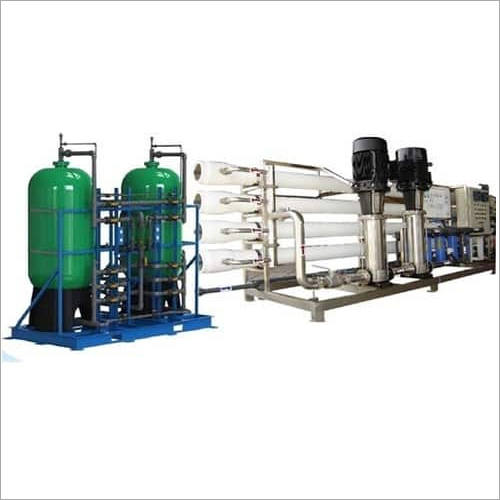
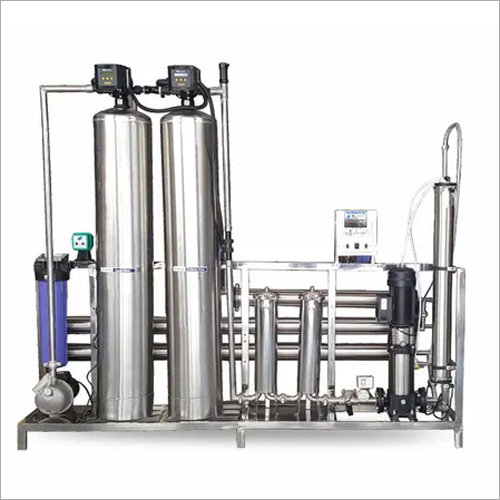
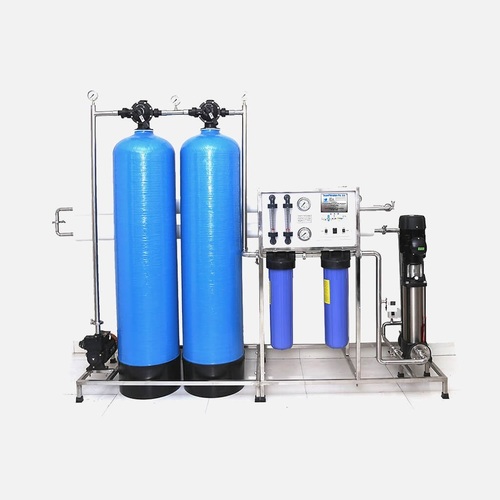
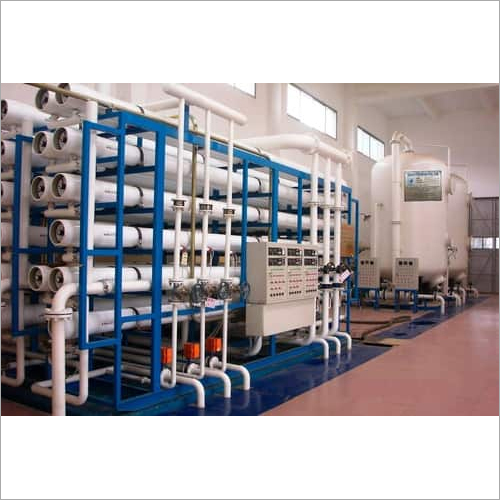
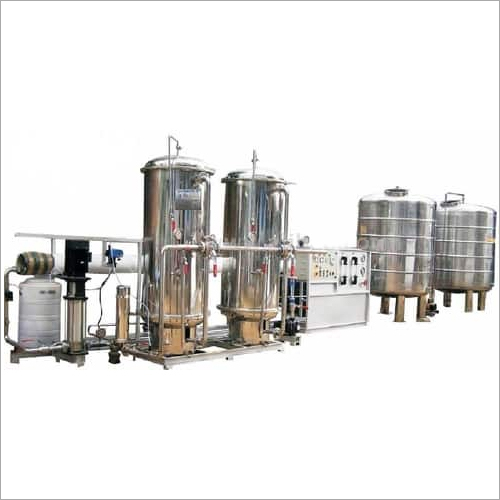
Efficient High-Capacity Water PurificationOur RO-based industrial water treatment plants are engineered for continuous duty, making them ideal for large commercial applications. The high-flow design effectively handles groundwater sources, delivering a consistent supply of treated water while minimizing downtime. Stainless steel frame structures enhance durability and longevity, even in demanding environments.
Turnkey Installation with Civil WorksWe manage the comprehensive installation process, including complete civil works, to ensure efficient integration into your facility. Our experienced team oversees every aspect from delivery to final commissioning, providing hassle-free deployment tailored to your site's space requirements.
FAQ's of Industrial Water Treatment Plant:
Q: How does the single-pass RO-based system in this plant purify industrial water?
A: The single-pass reverse osmosis (RO) system employs semi-permeable membranes to remove dissolved solids, contaminants, and impurities from groundwater. The process produces high-quality treated water suitable for industrial applications and ensures consistent water quality output at the designated capacity.
Q: What types of industries benefit from using this large-capacity water treatment plant?
A: Industries requiring substantial amounts of purified water, such as food and beverage, pharmaceuticals, textiles, and manufacturing, benefit from this high-flow design plant. It is particularly suited for industrial sites with continuous water demands and stringent quality requirements.
Q: Where can this industrial RO water treatment plant be installed?
A: The plant is designed for facilities with substantial space and can be installed at commercial and industrial premises across India. The stainless steel skid-mounted structure allows flexible positioning within various sites, depending on space availability and site conditions.
Q: What is involved in the installation process, and does it include civil works?
A: Installation is a comprehensive process managed by our professional team, including all necessary civil works such as site preparation and structural support. After installation, we ensure the plant is fully integrated and commissioned for continuous operation.
Q: How often does this water treatment plant require maintenance?
A: With a robust stainless steel structure and advanced components, this plant is designed for low-frequency maintenance. Regular checks ensure optimal efficiency, but its durable construction minimizes the need for frequent servicing.
Q: What is the power requirement for this water treatment plant?
A: The plant operates efficiently on a standard 220V/50Hz power source, making it compatible with common industrial electrical systems in India.
Q: What are the key benefits of choosing this RO-based industrial water treatment solution?
A: This solution delivers reliable high-capacity water purification, robust durability due to stainless steel construction, low maintenance costs, and turnkey installation with complete civil engineering support, ensuring a seamless and efficient project from start to finish.

 English
 Spanish
 French
 German
 Italian
 Chinese (Simplified)
 Japanese
 Korean
 Arabic
 Portuguese

 Send Inquiry



 Send Inquiry



 Send Inquiry
 Send SMS
 Call Me Free
