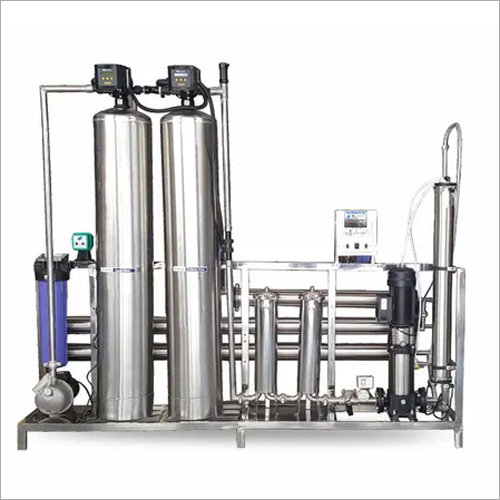
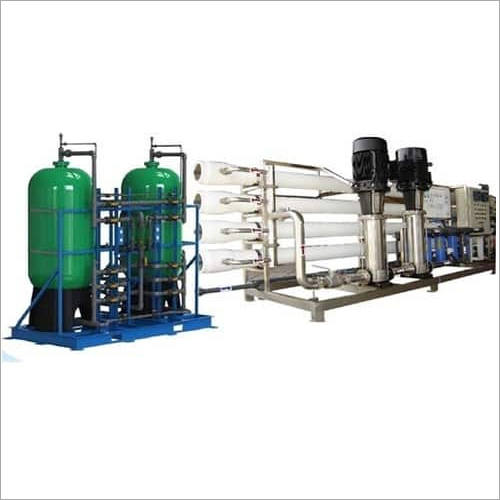
About SS RO Plant 1000 Lph
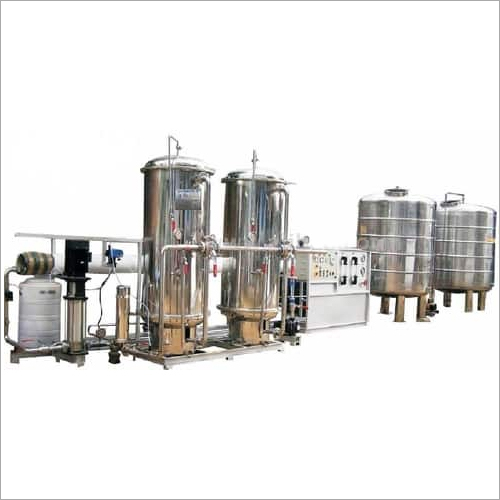
REVERSE OSMOSIS PLANTS
Reverse osmosis (RO) is a membrane-technology filtration process which filter greatly to reduce the various molecules and impurities from water by applying pressure to the solution, when it is on one side of a selective membrane. The huge benefit is that it is creating a clean water which will not harm environment. To get a great solution, it is the process in which the pressue side of the membrane and the pure solvent is allowed to pass to the other side. Reverse osmosis is used to purify Water in order to improve the color and gives a good quality of taste. It is counted as a best filtration method which remove all the hazardous fluids and remove minerals, heavy metals from water.
Classification of RO systems
The RO plants have been assorted into 3 categories:
Residential RO Plants
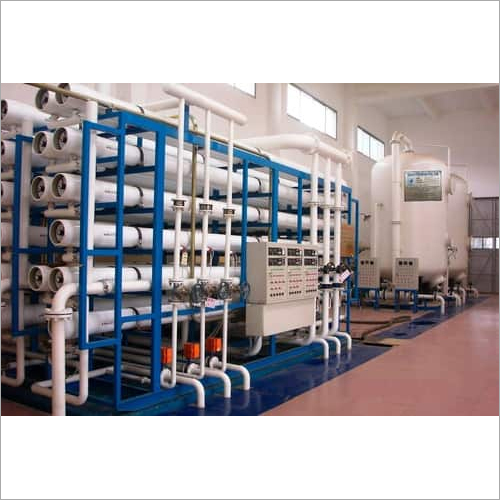
Industrial RO Plants
Commercial RO Plants
Why to choose us?
EFPL's offered machines are properly inspected under the vigilance of our deft professionals for stringent compliance with set industrial standards. In addition to this, the offered range of products is highly praised by our clients that are situated all across the worldwide. Our portfolio of reverse osmosis systems includes those specifically engineered and designed for large industrial applications, medium sized commercial applications, small laboratory applications and trailer-mounted mobile systems for temporary and emergency applications. Our RO plants make sure to control the nutrients as to maintain a good health by delivering a good quality of clean water. We design customize solutions which are suitable for marine applications for the purification of a large amount of water at one with a superb capacity of performance level.
Treatment Process of RO plants:
Fluids stems RO plants work on the basis of Cross-filtration method, through which a percentage amount of feed water is rejected as the elimination of hard materials during the filtration process. The entire procedure works through by removing impurities from water solvent by using pressure which filter out and flush away to leave a clean drinking water.
How Does Reverse Osmosis Work?
Reverse osmosis is water filtration process in which pre-treated as well as filtered water is connected to the high-pressure pump where pressure is developed and fed to the semi-permeable membrane. Reverse Osmosis membranes work on the Cross Flow Filtration method where the salts get rejected partially in order to equalize the concentrations. In other words, water generate by this process can be used for many reasons which includes concentration of impurities, eliminating dissolve minerals, waste water treatment and purification purpose.
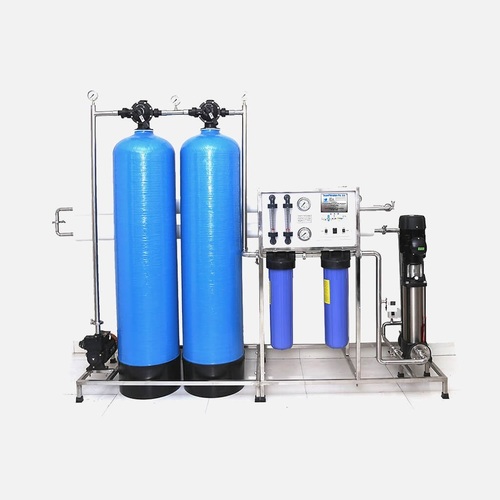
Comprehensive Water PurificationWith multi-stage filtration-including sand, activated carbon, and micron cartridge filters-the SS RO Plant ensures consistent removal of contaminants. Operating at 10-15 bar pressure, its four advanced spiral wound membranes efficiently handle raw water with up to 2000 ppm TDS, delivering up to 1000 liters of purified water per hour suited for drinking, commercial, and industrial needs.
Sturdy and Reliable EngineeringConstructed from premium SS 304/316 and fitted with high-quality UPVC/SS piping, this RO plant is engineered for durability and corrosion resistance. Its digital/PLC-based control system, along with a manual/automatic flushing mechanism, provides reliability and convenience, while its skid-mounted design allows for flexible installation and relocation.
Low Maintenance and Efficient OperationDesigned to operate within a temperature range of 5C to 45C, this semi-automatic system leverages efficient energy use (2-3kW) while maintaining low noise. With a high recycle rate (60-70%) and optimal reject water ratio, it reduces water wastage. The system is easy to operate, supporting both manual and automated cleaning for long-term, trouble-free use.
FAQ's of SS RO Plant 1000 Lph:
Q: How does the SS RO Plant 1000 LPH purify water?
A: This plant uses a multi-stage reverse osmosis process, starting with sand and activated carbon pre-filtration, followed by passage through imported polyamide spiral wound membranes. These stages collectively remove up to 99% of total dissolved solids (TDS), contaminants, and impurities, ensuring water output conductivity below 10 S/cm.
Q: What types of water sources are suitable for this RO plant?
A: The system is specifically designed for groundwater sources with raw water TDS up to 2000 ppm and inlet pressure between 2-4 kg/cm2. It is suitable for varying pH levels (6.5-8.5), making it ideal for commercial, industrial, and drinking water applications.
Q: When should the cleaning system be operated?
A: The cleaning system, with both manual and automatic flushing options, should be activated as per maintenance schedules or whenever there is a noticeable drop in permeate flow or quality. Routine cleaning ensures membrane efficiency and longevity.
Q: Where can this SS RO Plant be installed?
A: Due to its skid-mounted design and compact dimensions (approx. 1800 x 800 x 1850 mm), the plant can be installed in commercial, industrial, and institutional settings across India where reliable water purification is essential. It requires a standard 220V/50Hz electric connection.
Q: What is the process flow of water through the plant?
A: Raw water first enters the multi-grade sand filter, moves to the activated carbon filter, passes through a micron cartridge filter, and is then pressurized by a high-pressure SS pump before entering the RO membranes. The purified water is then discharged via a direct pipe outlet.
Q: How does using this RO plant benefit users?
A: Users benefit from consistent, high-purity water (up to 99% impurity removal) with low conductivity, reduced water wastage thanks to efficient recycle rates, and assured durability through corrosion-resistant and robust stainless steel construction. The user-friendly operation and low noise add to its appeal.

 English
 Spanish
 French
 German
 Italian
 Chinese (Simplified)
 Japanese
 Korean
 Arabic
 Portuguese

 Send Inquiry



 Send Inquiry



 Send Inquiry
 Send SMS
 Call Me Free
